
Free Ring Size Converter & Online Sizer
Convert ring sizes between UK letters, US numbers, EU and millimetres. Or measure your size at home using your phone screen, a card, or paper — no ring sizer required.
Convert between ring sizing systems
If you already know your ring size in one country, convert it to UK or any of 11 international systems.
Measure your ring size using your phone screen
No ring sizer? No problem. Calibrate your screen with any credit, debit or ID card (all are 85.60mm wide), then measure an existing ring or check what fits your finger.
Step 1: Hold a card to your screen and adjust the slider
Step 2: Choose how to measure
Measure your ring size at home with paper or string
All you need is a strip of paper (or string), scissors, and a ruler in mm.
- Cut a thin strip of paper (about 50mm long, 5mm wide). String or floss also works.
- Wrap it around the base of the finger where the ring will sit. Make it snug but not tight.
- Mark where the paper overlaps with a pen.
- Lay it flat against a ruler and read the length in millimetres.
- Enter that number below to find your size.
💡 Pro tips for accuracy
- Measure at the end of the day — fingers swell up to 5% throughout the day.
- Avoid measuring when your hands are cold (fingers shrink).
- Measure 3-4 times and take the average for best accuracy.
- If your knuckle is wider than the base of your finger, measure both and pick a size in between.
Your ring size
Half sizes (e.g. 6.5, 7.5) give the best fit. If you're between two sizes, pick the larger one — you can always have a jeweller resize a ring down, but resizing up costs more.
Now shop ifshe rings
Note your size above — you'll pick it on each product page when you order.
Shop ifshe rings →Print at 100% scale. Use the credit-card frame on the PDF to verify your printer hasn't shrunk it.
Shop ifshe rings
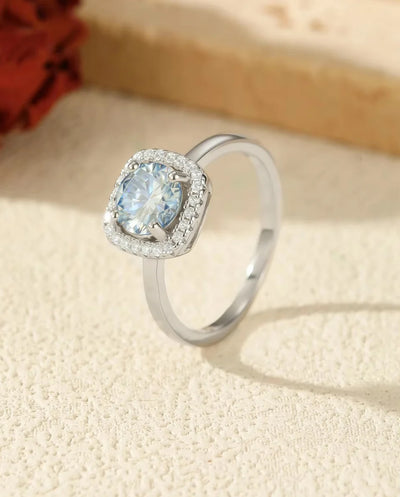
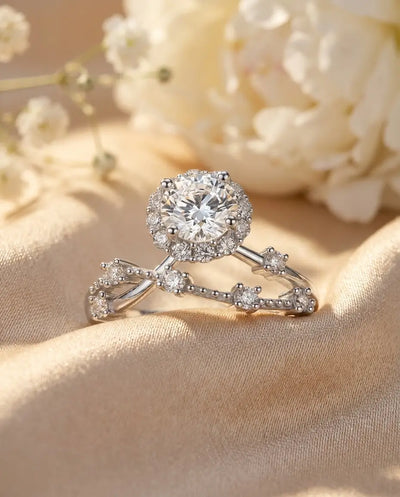
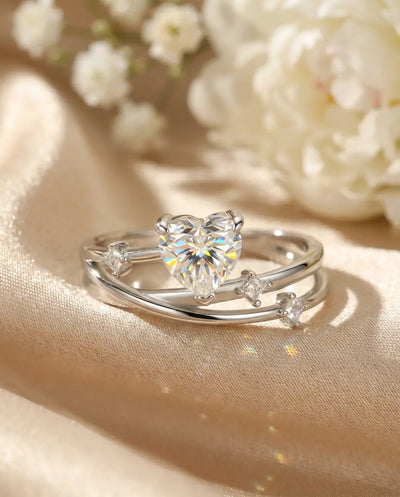
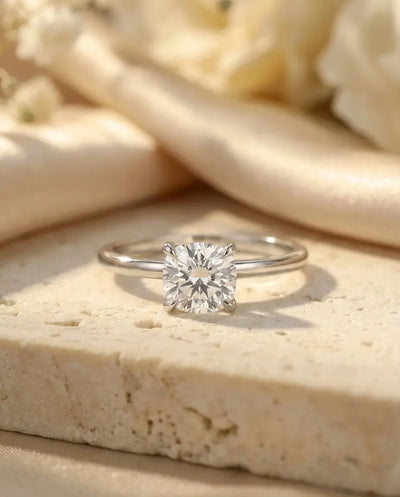
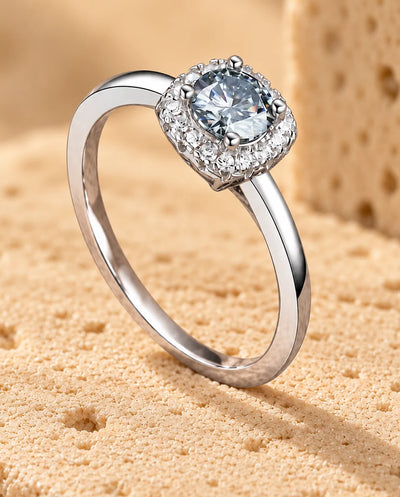
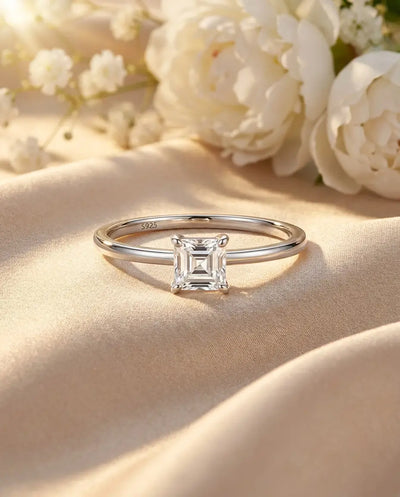
Explore our most-loved rings, available in a wide range of sizes.
Frequently asked questions
How can I calculate my ring size?
The easiest way is to wrap a strip of paper or string around the base of your finger, mark where it overlaps, and measure the length in millimetres. That number is your finger circumference — use our Measure at Home tab to convert it instantly to a ring size.
What time of day do fingers swell the most?
Fingers are usually smallest in the morning when they're cool, and largest in the late afternoon to early evening. They can swell by 3-5% throughout the day, and even more in hot weather, after exercise, or after eating salty food. Measure in the late afternoon for the most reliable result.
What is a size 7 ring size in inches?
A US size 7 ring has an inner diameter of about 17.3mm (0.68 inches) and an inner circumference of about 54.4mm (2.14 inches). In UK sizing that's N; in EU sizing it's 54.
Can I size my ring on my phone?
Yes — our Measure with Phone tab lets you calibrate your screen using any credit card (which is a standardised 85.60mm wide), then either place your existing ring on the screen and adjust a circle to match, or display a virtual ring at actual size to compare against your finger. Accuracy is usually within 0.5mm if you calibrate carefully.
How do I convert US ring size to UK?
US uses numbers (3-13.5), UK uses letters (F-Z). A US 6 is UK L, US 7 is UK N, US 8 is UK P, US 9 is UK R. Use our Convert tab for all sizes including half sizes.
How do I convert European ring size?
European (EU) ring sizes are based on the ISO 8653 standard, where the size number equals the ring's inner circumference in millimetres. So an EU 54 ring has a 54mm inner circumference. Our Convert tab handles all 11 international systems.
What if my measurement falls between two sizes?
Choose the larger size. It's easier and cheaper for a jeweller to resize a ring smaller than to size it up. Half sizes (6.5, 7.5) exist for a reason — they give the best fit between whole sizes.
Does the credit card method work on any phone?
It works on any phone, tablet, or computer screen, as long as you calibrate carefully. The card is the reference because all credit, debit, and ID cards globally follow the ISO/IEC 7810 ID-1 standard (85.60mm × 53.98mm). If you rotate your screen, you'll need to recalibrate.
How accurate is measuring with paper?
If done carefully — using thin paper, snug-but-not-tight wrapping, and measuring with a millimetre ruler — paper measurement is accurate within about 1mm, which is usually within one ring size. Repeat 3-4 times and take the average for best results.
Should I size up if I'm buying a wide band ring?
Yes — wide bands (over 6mm wide) fit tighter than thin bands at the same nominal size, because more of the ring is in contact with your finger. Size up by half a size for wide bands.
Why is half-size important?
A half size difference equals about 0.4mm of diameter, which is enough to make the difference between 'comfortably snug' and 'too tight' or 'falls off'. Most quality jewellers, including ifshe, offer rings in half sizes for this reason.
Can my ring size change over time?
Yes. Fingers can change size due to weight changes, pregnancy, age, temperature, medication, or hormonal cycles. It's worth re-measuring before buying any expensive ring, and choosing a style that's easy to resize (avoid eternity bands and tension settings if you expect size changes).